
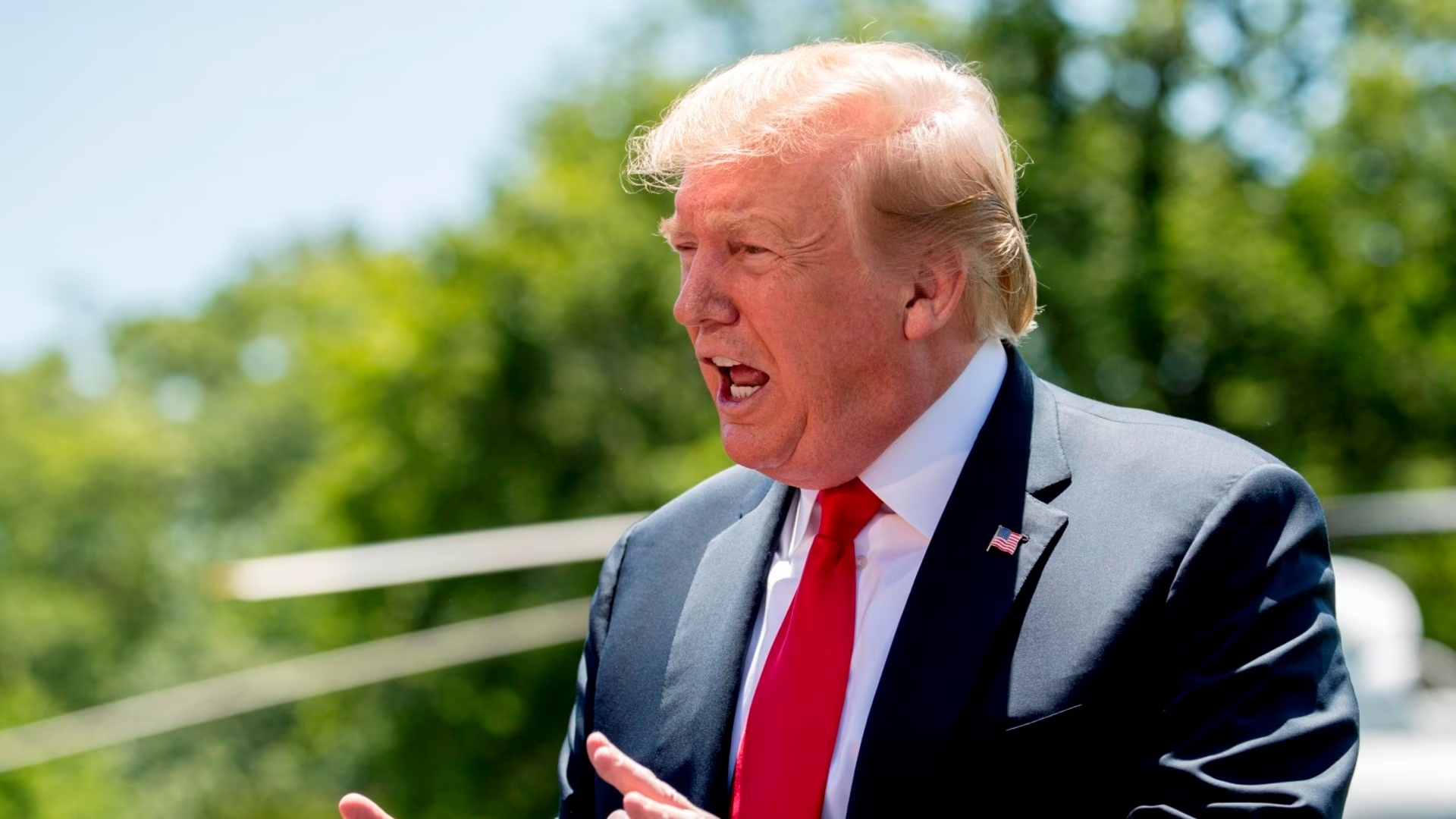
The Trump administration recently unveiled the Great American Recovery Initiative, a program that promises to transform how America addresses its addiction crisis. While the Oval Office signing ceremony attracted applause and attention, addiction experts and treatment providers now question what practical steps will follow.
A Shift Toward Treating Addiction as a Medical Condition
President Trump signed the executive order on Thursday, marking a noticeable shift in how federal leadership discusses addiction. Instead of portraying substance abuse as a moral failure, the initiative frames addiction as a chronic medical condition that requires proper treatment.
Health and Human Services Secretary Robert F. Kennedy Jr. and Kathryn Burgum, wife of Interior Secretary Doug Burgum, will jointly lead the program. Both leaders openly shared their personal recovery journeys from alcohol addiction, adding emotional weight to the announcement.
Burgum explained that the initiative aims to move national policy toward prevention, coordination, and science-based treatment. She highlighted plans to unite federal agencies across healthcare, justice, labor, housing, veterans affairs, and education under one coordinated strategy.
Personal Stories Highlight the Crisis
The announcement sparked strong emotional reactions among senior officials. President Trump mentioned his late brother’s battle with alcohol addiction. Vice President JD Vance, White House Chief of Staff Susie Wiles, and Middle East envoy Steve Witkoff also discussed how addiction affected their families.
These personal accounts underscored the widespread impact of substance abuse across American society.
Questions Surround Funding and Implementation
Despite the emotional speeches, the administration did not reveal new funding plans or specific program details. Officials also failed to provide a clear timeline for implementation.
Kennedy promised that major announcements would follow in the coming weeks. However, policy analysts and healthcare providers expressed concern about the lack of immediate action plans.
Overlap With Existing Federal Programs
The initiative has also raised structural questions. The Office of National Drug Control Policy (ONDCP) already coordinates 19 federal agencies and manages a $44 billion budget targeting the opioid epidemic. ONDCP Director Sara Carter Bailey attended the signing ceremony but did not speak publicly about the initiative.
Observers now question how the new recovery program will differ from or improve existing federal strategies.
Recent Policy Decisions Create Uncertainty
The timing of the announcement adds another layer of complexity. Just two weeks earlier, the administration threw the addiction treatment community into turmoil by canceling nearly $2 billion in grants from the Substance Abuse and Mental Health Services Administration before reversing course days later. Treatment centers nationwide, including facilities like Serenity Malibu that serve patients struggling with substance use disorders, faced uncertainty about continued funding for critical programs..
Facilities across the country, including centers that treat patients with substance use disorders, faced concerns about maintaining essential services during the funding confusion.
SAMHSA has also undergone major internal changes. The agency lost much of its senior leadership and over half of its workforce due to layoffs and resignations. Additionally, officials terminated $1.7 billion in SAMHSA block grants that states use to fund local treatment programs. The administration has not appointed a permanent SAMHSA administrator, which further complicates oversight and stability.
The Scale of America’s Addiction Crisis
During his remarks, Kennedy highlighted the magnitude of substance abuse in the United States. He stated that nearly 50 million Americans struggle with substance use disorder. Many individuals never receive treatment, and others believe recovery is impossible due to systemic barriers.
Treatment providers acknowledge that recovery programs succeed when patients receive early, consistent, and respectful care. The challenge remains whether federal policy can support these treatment standards nationwide.
Hope, Skepticism, and the Road Ahead
Healthcare professionals remain cautiously optimistic. Previous administrations introduced ambitious addiction recovery strategies that failed to deliver measurable improvements. Treatment centers still operate within a fragmented system that relies heavily on insurance coverage, state funding, and federal grants. As a result, many patients continue to face limited access to care.
As the administration prepares additional policy announcements, both providers and patients wait for concrete solutions. The success of the Great American Recovery Initiative will depend on whether it delivers real coordination, sustainable funding, and accessible treatment programs.
America continues to face an addiction crisis that claims more than 100,000 lives each year. The coming months will determine whether this initiative marks a meaningful policy transformation or becomes another example of political promises without lasting impact.
